Knowledgebase (2370)
Children categories
A list is an effective way to organize information and present it clearly and logically. The elements in the list stand out from other parts of the text, encouraging readers to pay attention to them. Depending on your requirements, you can add numbered lists, bulleted lists or multi-level lists to your Word documents. This article demonstrates how to create these types of lists in a Word document in Java using Spire.Doc for Java.
- Insert a Numbered List in Word in Java
- Insert a Bulleted List in Word in Java
- Insert a Multi-Level Numbered List in Word in Java
- Insert a Multi-Level Mixed-Type List in Word in Java
Install Spire.Doc for Java
First, you're required to add the Spire.Doc.jar file as a dependency in your Java program. The JAR file can be downloaded from this link. If you use Maven, you can easily import the JAR file in your application by adding the following code to your project's pom.xml file.
<repositories>
    <repository>
        <id>com.e-iceblue</id>
        <name>e-iceblue</name>
        <url>https://repo.e-iceblue.com/nexus/content/groups/public/</url>
    </repository>
</repositories>
<dependencies>
    <dependency>
        <groupId>e-iceblue</groupId>
        <artifactId>spire.doc</artifactId>
        <version>14.7.0</version>
    </dependency>
</dependencies>
Insert a Numbered List in Word in Java
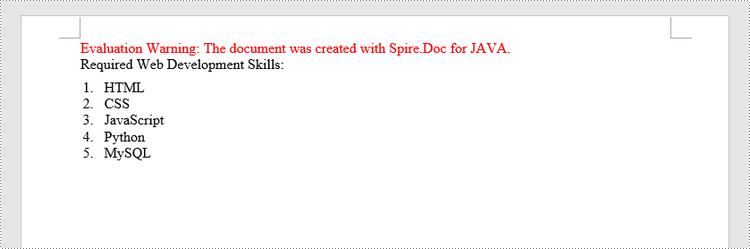
Spire.Doc for Java offers the ListStyle class that you can use to create a numbered list style or a bulleted style. Then, the list style can be applied to a paragraph using Paragraph.getListFormat().applyStyle() method. The steps to create a numbered list are as follows.
- Create a Document object.
- Add a section using Document.addSection() method.
- Create an instance of ListStyle class, specifying the list type to Numbered.
- Get a specific level of the list using ListStyle.getLevels().get(index) method, and set the numbering type using ListLevel.setPatternType() method.
- Add the list style to the document using Document.getListStyles().add() method.
- Add several paragraphs to the document using Section.addParagraph() method.
- Apply the list style to a specific paragraph using Paragraph.getListFormat().applyStyle() method.
- Specify the list level using Paragraph.getListFormat().setListLevelNumber() method.
- Save the document to a Word file using Document.saveToFile() method.
- Java
import com.spire.doc.*;
import com.spire.doc.documents.*;
import com.spire.doc.collections.ListLevelCollection;

public class InsertNumberedList {
    public static void main(String[] args) {
        //Create a Document object
        Document document = new Document();

        //Add a section
        Section section = document.addSection();

        //Create a numbered list style
        ListStyle listStyle =document.getStyles().add(ListType.Numbered, "numberList");
        ListLevelCollection levels = listStyle.getListRef().getLevels();
        levels.get(0).setPatternType(ListPatternType.Decimal_Half_Width);
        levels.get(0).setTextPosition(20);

        //Add a paragraph
        Paragraph paragraph = section.addParagraph();
        paragraph.appendText("Required Web Development Skills:");
        paragraph.getFormat().setAfterSpacing(5);

        //Add a paragraph and apply the numbered list style to it
        paragraph = section.addParagraph();
        paragraph.appendText("HTML");
        paragraph.getListFormat().applyStyle("numberedList");
        paragraph.getListFormat().setListLevelNumber(0);

        //Add another four paragraphs and apply the numbered list style to them
        paragraph = section.addParagraph();
        paragraph.appendText("CSS");
        paragraph.getListFormat().applyStyle("numberedList");
        paragraph.getListFormat().setListLevelNumber(0);

        paragraph = section.addParagraph();
        paragraph.appendText("JavaScript");
        paragraph.getListFormat().applyStyle("numberedList");
        paragraph.getListFormat().setListLevelNumber(0);

        paragraph = section.addParagraph();
        paragraph.appendText("Python");
        paragraph.getListFormat().applyStyle("numberedList");
        paragraph.getListFormat().setListLevelNumber(0);

        paragraph = section.addParagraph();
        paragraph.appendText("MySQL");
        paragraph.getListFormat().applyStyle("numberedList");
        paragraph.getListFormat().setListLevelNumber(0);

        //Save the document to file
        document.saveToFile("output/NumberedList.docx", FileFormat.Docx);
    }
}
Insert a Bulleted List in Word in Java
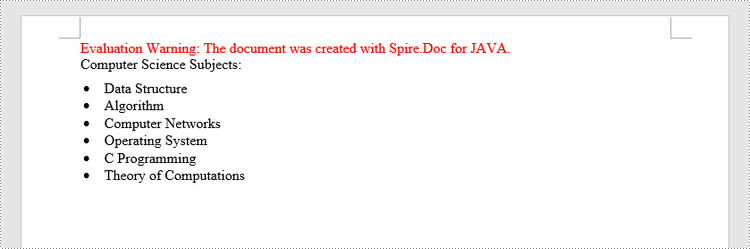
The process of creating a bulleted list is similar to that of creating a numbered list. The difference is that when creating a list style, you must specify the list type as Bulleted and set a bullet symbol for it. The following are the detailed steps.
- Create a Document object.
- Add a section using Document.addSection() method.
- Create an instance of ListStyle class, specifying the list type to Bulleted.
- Get a specific level of the list using ListStyle.getLevels().get(index) method, and set the bullet symbol using ListLevel.setBulletCharacter() method.
- Add the list style to the document using Document.getListStyles().add() method.
- Add several paragraphs to the document using Section.addParagraph() method.
- Apply the list style to a specific paragraph using Paragraph.getListFormat().applyStyle() method.
- Specify the list level using Paragraph.getListFormat().setListLevelNumber() method.
- Save the document to a Word file using Document.saveToFile() method.
- Java
import com.spire.doc.*;
import com.spire.doc.documents.*;
import com.spire.doc.collections.ListLevelCollection;

public class InsertBulletedList {
    public static void main(String[] args) {
        //Create a Document object
        Document document = new Document();

        //Add a section
        Section section = document.addSection();

        //Create a bulleted list style
        ListStyle numberList =document.getStyles().add(ListType.Bulleted, "bulletedList");
        ListLevelCollection Levels = numberList.getListRef().getLevels();
        Levels.get(0).setBulletCharacter("\u00B7");
        Levels.get(0).getCharacterFormat().setFontName("Symbol");
        Levels.get(0).setTextPosition(20);

        //Add a paragraph
        Paragraph paragraph = section.addParagraph();
        paragraph.appendText("Computer Science Subjects:");
        paragraph.getFormat().setAfterSpacing(5);

        //Add a paragraph and apply the bulleted list style to it
        paragraph = section.addParagraph();
        paragraph.appendText("Data Structure");
        paragraph.getListFormat().applyStyle("bulletedList");
        paragraph.getListFormat().setListLevelNumber(0);

        //Add another five paragraphs and apply the bulleted list style to them
        paragraph = section.addParagraph();
        paragraph.appendText("Algorithm");
        paragraph.getListFormat().applyStyle("bulletedList");
        paragraph.getListFormat().setListLevelNumber(0);

        paragraph = section.addParagraph();
        paragraph.appendText("Computer Networks");
        paragraph.getListFormat().applyStyle("bulletedList");
        paragraph.getListFormat().setListLevelNumber(0);

        paragraph = section.addParagraph();
        paragraph.appendText("Operating System");
        paragraph.getListFormat().applyStyle("bulletedList");
        paragraph.getListFormat().setListLevelNumber(0);

        paragraph = section.addParagraph();
        paragraph.appendText("C Programming");
        paragraph.getListFormat().applyStyle("bulletedList");
        paragraph.getListFormat().setListLevelNumber(0);

        paragraph = section.addParagraph();
        paragraph.appendText("Theory of Computations");
        paragraph.getListFormat().applyStyle("bulletedList");
        paragraph.getListFormat().setListLevelNumber(0);

        //Save the document to file
        document.saveToFile("output/BulletedList.docx", FileFormat.Docx);
    }
}
Insert a Multi-Level Numbered List in Word in Java
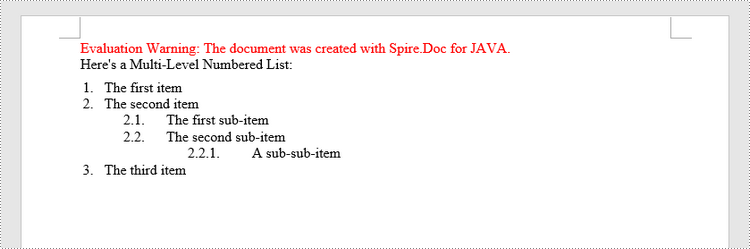
A multi-level list consists of at least two different levels. Each level of a nested list can be accessed using ListStyle.getLevels().get(index) method. Through ListLevel object, you can set the numbering type and prefix for a certain level. The following are the steps to create a multi-level numbered list in Word.
- Create a Document object.
- Add a section using Document.addSection() method.
- Create an instance of ListStyle class, specifying the list type to Numbered.
- Get a specific level of the list using ListStyle.getLevels().get(index) method, and set the numbering type and prefix.
- Add the list style to the document using Document.getListStyles().add() method.
- Add several paragraphs to the document using Section.addParagraph() method.
- Apply the list style to a specific paragraph using Paragraph.getListFormat().applyStyle() method.
- Specify the list level using Paragraph.getListFormat().setListLevelNumber() method.
- Save the document to a Word file using Document.saveToFile() method.
- Java
import com.spire.doc.*;
import com.spire.doc.documents.*;
import com.spire.doc.collections.ListLevelCollection;

public class InsertMultilevelNumberedList  {
    public static void main(String[] args) {
        //Create a Document object
        Document document = new Document();

        //Add a section
        Section section = document.addSection();

        //Create a numbered list style, specifying number prefix and pattern type of each level
        ListStyle listStyle =document.getStyles().add(ListType.Numbered, "nestedStyle");
        ListLevelCollection levels = listStyle.getListRef().getLevels();
        levels.get(0).setPatternType(ListPatternType.Arabic);
        levels.get(0).setTextPosition(20);
        levels.get(1).setNumberPrefix("\u0000.");
        levels.get(1).setPatternType(ListPatternType.Arabic);
        levels.get(2).setNumberPrefix("\u0000.\u0001.");
        levels.get(2).setPatternType(ListPatternType.Arabic);

        //Add a paragraph
        Paragraph paragraph = section.addParagraph();
        paragraph.appendText("Here's a Multi-Level Numbered List:");
        paragraph.getFormat().setAfterSpacing(5f);

        //Add a paragraph and apply the numbered list style to it
        paragraph = section.addParagraph();
        paragraph.appendText("The first item");
        paragraph.getListFormat().applyStyle("nestedStyle");
        paragraph.getListFormat().setListLevelNumber(0);

        //Add another five paragraphs and apply the numbered list stype to them
        paragraph = section.addParagraph();
        paragraph.appendText("The second item");
        paragraph.getListFormat().applyStyle("nestedStyle");
        paragraph.getListFormat().setListLevelNumber(0);

        paragraph = section.addParagraph();
        paragraph.appendText("The first sub-item");
        paragraph.getListFormat().applyStyle("nestedStyle");
        paragraph.getListFormat().setListLevelNumber(1);

        paragraph = section.addParagraph();
        paragraph.appendText("The second sub-item");
        paragraph.getListFormat().continueListNumbering();
        paragraph.getListFormat().applyStyle("nestedStyle");

        paragraph = section.addParagraph();
        paragraph.appendText("A sub-sub-item");
        paragraph.getListFormat().applyStyle("nestedStyle");
        paragraph.getListFormat().setListLevelNumber(2);

        paragraph = section.addParagraph();
        paragraph.appendText("The third item");
        paragraph.getListFormat().applyStyle("nestedStyle");
        paragraph.getListFormat().setListLevelNumber(0);

        //Save the document to file
        document.saveToFile("output/MultilevelNumberedList.docx", FileFormat.Docx);
    }
}
Insert a Multi-Level Mixed-Type List in Word in Java
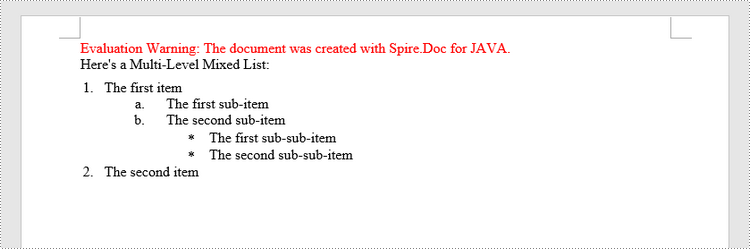
In some cases, you may want to mix number and symbol in a multi-level list. To create a mixed-type list, you just need to create a numbered list style and a bulleted list style and apply them to different paragraphs. The detailed steps are as follows.
- Create a Document object.
- Add a section using Document.addSection() method.
- Create a numbered list style and a bulleted list style.
- Add several paragraphs to the document using Section.addParagraph() method.
- Apply different list style to different paragraphs using Paragraph.getListFormat().applyStyle() method.
- Save the document to a Word file using Document.saveToFile() method.
- Java
import com.spire.doc.*;
import com.spire.doc.documents.*;
import com.spire.doc.collections.ListLevelCollection;

public class InsertMultilevelMixedTypeList  {
    public static void main(String[] args) {
        //Create a Document object
        Document document = new Document();

        //Add a section
        Section section = document.addSection();

        //Create a numbered list style
        ListStyle numberedListStyle =document.getStyles().add(ListType.Numbered, "numberedStyle");
        ListLevelCollection levels = numberedListStyle.getListRef().getLevels();
        levels.get(0).setPatternType(ListPatternType.Arabic);
        levels.get(0).setTextPosition(20);
        levels.get(1).setPatternType(ListPatternType.Low_Letter);

        //Create a bulleted list style
        ListStyle bulletedListStyle = document.getStyles().add(ListType.Bulleted,"bulletedStyle");
        ListLevelCollection levels_bulletedListStyle = bulletedListStyle.getListRef().getLevels();
        levels_bulletedListStyle.get(2).setBulletCharacter("\u002A");
        levels_bulletedListStyle.get(2).getCharacterFormat().setFontName("Symbol");

        //Add a paragraph
        Paragraph paragraph = section.addParagraph();
        paragraph.appendText("Here's a Multi-Level Mixed List:");
        paragraph.getFormat().setAfterSpacing(5f);

        //Add a paragraph and apply the numbered list style to it
        paragraph = section.addParagraph();
        paragraph.appendText("The first item");
        paragraph.getListFormat().applyStyle("numberedStyle");
        paragraph.getListFormat().setListLevelNumber(0);

        //Add another five paragraphs and apply different list stype to them
        paragraph = section.addParagraph();
        paragraph.appendText("The first sub-item");
        paragraph.getListFormat().applyStyle("numberedStyle");
        paragraph.getListFormat().setListLevelNumber(1);

        paragraph = section.addParagraph();
        paragraph.appendText("The second sub-item");
        paragraph.getListFormat().setListLevelNumber(1);
        paragraph.getListFormat().applyStyle("numberedStyle");

        paragraph = section.addParagraph();
        paragraph.appendText("The first sub-sub-item");
        paragraph.getListFormat().applyStyle("bulletedStyle");
        paragraph.getListFormat().setListLevelNumber(2);

        paragraph = section.addParagraph();
        paragraph.appendText("The second sub-sub-item");
        paragraph.getListFormat().applyStyle("bulletedStyle");
        paragraph.getListFormat().setListLevelNumber(2);

        paragraph = section.addParagraph();
        paragraph.appendText("The second item");
        paragraph.getListFormat().applyStyle("numberedStyle");
        paragraph.getListFormat().setListLevelNumber(0);

        //Save the document to file
        document.saveToFile("output/MultilevelMixedList.docx", FileFormat.Docx);
    }
}
Apply for a Temporary License
If you'd like to remove the evaluation message from the generated documents, or to get rid of the function limitations, please request a 30-day trial license for yourself.
Spire.XLS for Python is a professional Excel development component that can be used to create, read, write and convert Excel files on any Python platform. Spire.XLS for Python offers object model Excel API for speeding up Excel programming in Python platform - create new Excel documents from template, edit existing Excel documents and convert Excel files.
Spire.XLS for Python enjoys good reputation in both enterprise and individual customers. These customer types include Banks, Data processing houses, Educational institutions, Government organizations, Insurance firms, Legal institutions, Postal/cargo services and etc.


Spire.XLS for Python is a Python library for reading, creating, editing and converting Excel (.xls & .xlsx) files in any Python application. This article shows you how to install Spire.XLS for Python on Windows.
Step 1
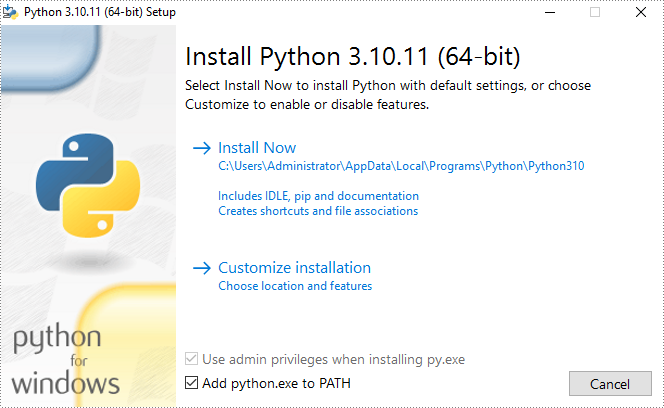
Download the latest version of Python and install it on your computer. If you have already installed it, skip to step 2.
Step 2
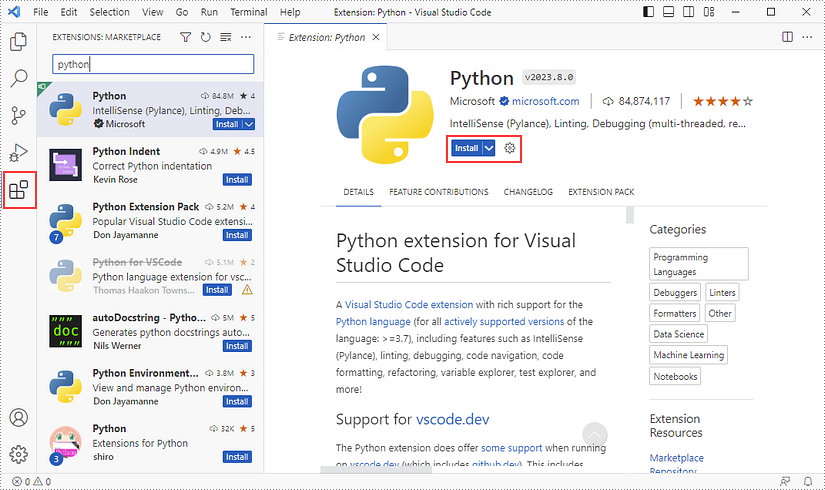
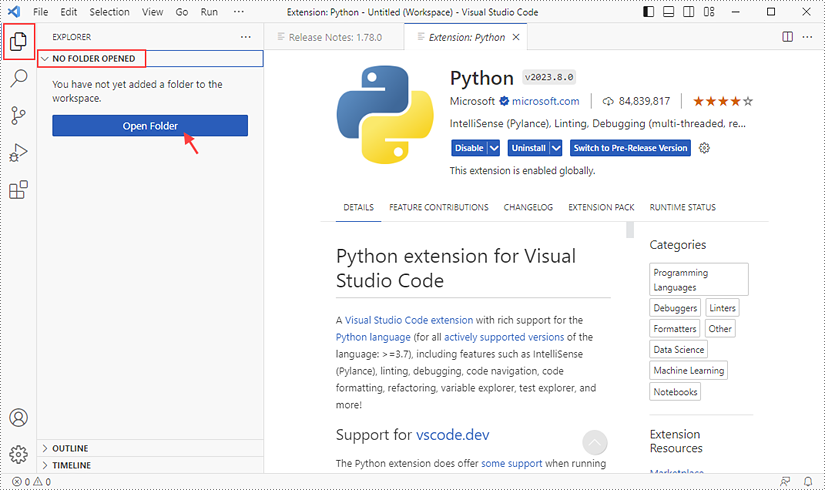
Click 'Extensions' in VS Code, search for 'Python' and then install it.
Step 3
Click 'Explorer' - 'NO FOLRDER OPENED' - 'Open Folder'.
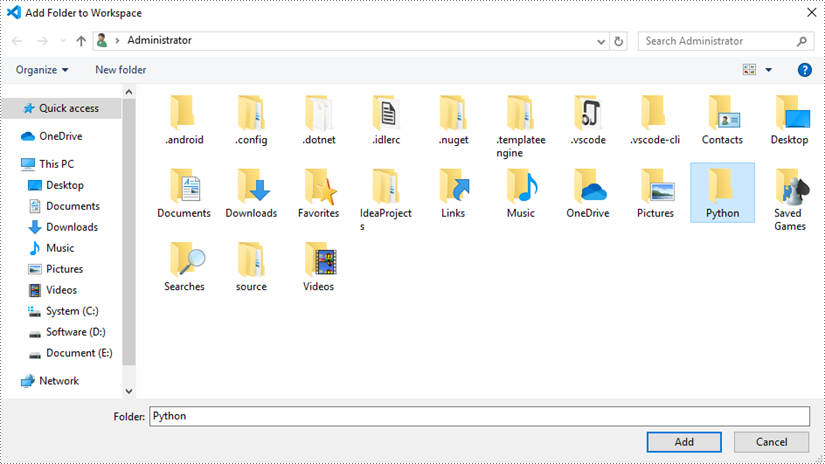
Choose an existing folder as the workspace, or you can create a new folder and then select it.
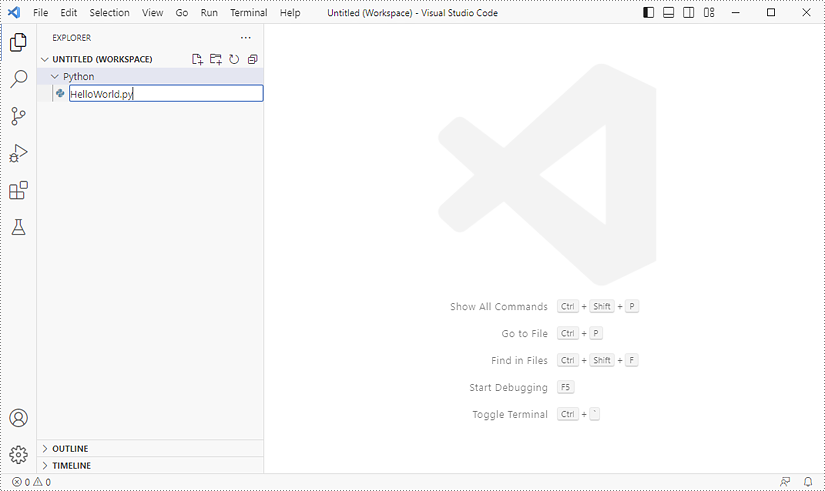
Add a .py file to the folder you've just added (Python folder in this case), and name it whatever you like.
Step 4
Click 'Terminal' and then 'New Terminal'.
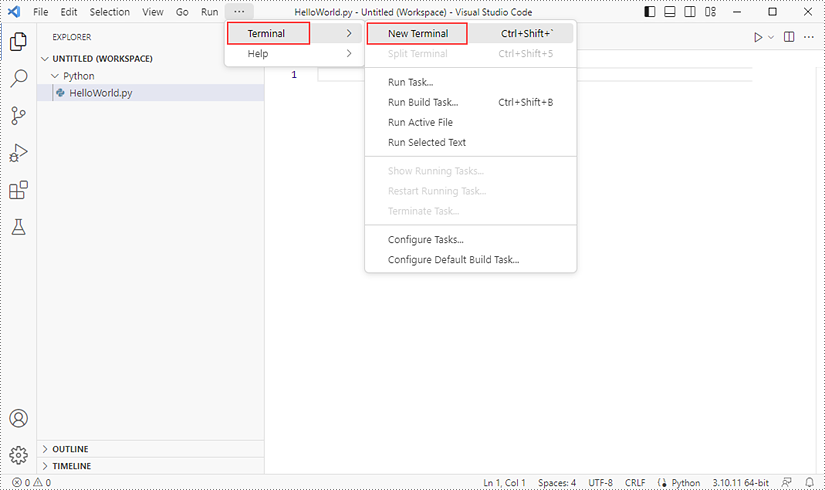
Input the following command to install Spire.XLS for Python and plum-dispatch v1.7.4.
pip install Spire.XLS
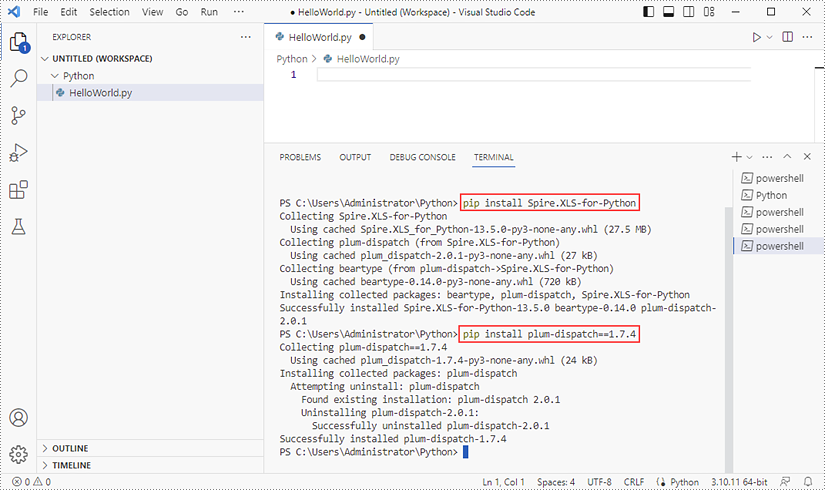
Alternatively, you can download Spire.XLS for Python from our website, and unzip it to get the .whl file from the 'lib' folder.
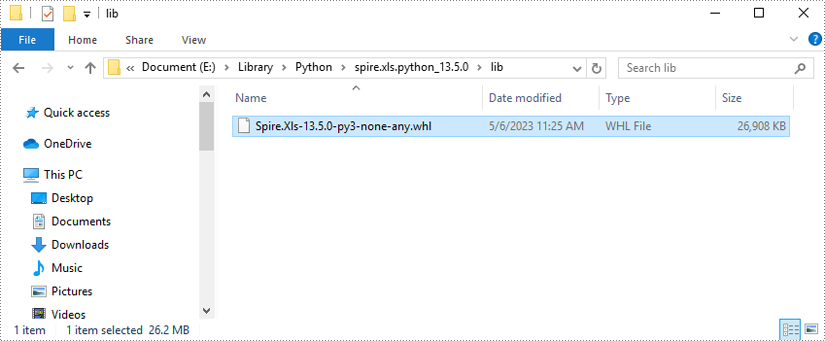
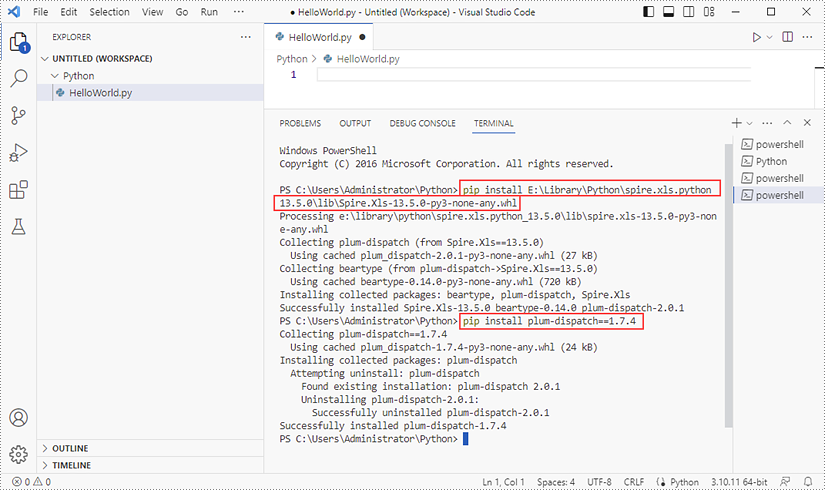
Then, install Spire.XLS for Python and plum-dispatch v1.7.4 by running the following commands.
pip install E:\Library\Python\spire.xls.python_13.5.0\lib\Spire.Xls-13.5.0-py3-none-any.whl
Step 5
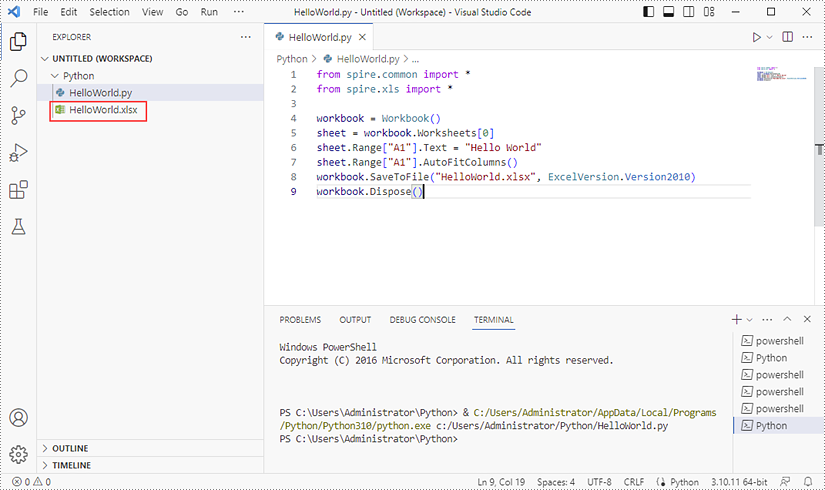
Add the following code snippet to the 'HelloWorld.py' file.
- Python
from spire.xls.common import *
from spire.xls import *

workbook = Workbook()
sheet = workbook.Worksheets[0]
sheet.Range["A1"].Text = "Hello World"
sheet.Range["A1"].AutoFitColumns()
workbook.SaveToFile("HelloWorld.xlsx", ExcelVersion.Version2010)
workbook.Dispose()
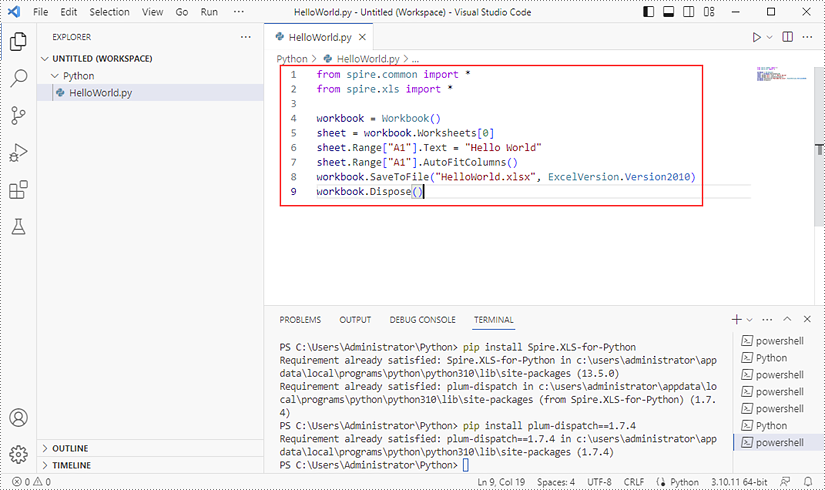
Once you run the Python file, you'll see the result Excel document in the 'EXPORER' panel.