page 225

class Program
    {
        static void Main(string[] args)
        {
            string docName = @"..\..\Documents\Sheet7.xlsx";
            string sheetName = "Jane";
            string cell1Name = "B2";
            string cell2Name = "C2";
            MergeTwoCells(docName, sheetName, cell1Name, cell2Name);
        }
        // Given a document name, a worksheet name, and the names of two adjacent cells, merges the two cells.
        // When two cells are merged, only the content from one cell is preserved:
        // the upper-left cell for left-to-right languages or the upper-right cell for right-to-left languages.
        private static void MergeTwoCells(string docName, string sheetName, string cell1Name, string cell2Name)
        {
            // Open the document for editing.
            using (SpreadsheetDocument document = SpreadsheetDocument.Open(docName, true))
            {
                Worksheet worksheet = GetWorksheet(document, sheetName);
                if (worksheet == null || string.IsNullOrEmpty(cell1Name) || string.IsNullOrEmpty(cell2Name))
                {
                    return;
                }

                // Verify if the specified cells exist, and if they do not exist, create them.
                CreateSpreadsheetCellIfNotExist(worksheet, cell1Name);
                CreateSpreadsheetCellIfNotExist(worksheet, cell2Name);

                MergeCells mergeCells;
                if (worksheet.Elements().Count() > 0)
                {
                    mergeCells = worksheet.Elements().First();
                }
                else
                {
                    mergeCells = new MergeCells();

                    // Insert a MergeCells object into the specified position.
                    if (worksheet.Elements().Count() > 0)
                    {
                        worksheet.InsertAfter(mergeCells, worksheet.Elements().First());
                    }
                    else if (worksheet.Elements().Count() > 0)
                    {
                        worksheet.InsertAfter(mergeCells, worksheet.Elements().First());
                    }
                    else if (worksheet.Elements().Count() > 0)
                    {
                        worksheet.InsertAfter(mergeCells, worksheet.Elements().First());
                    }
                    else if (worksheet.Elements().Count() > 0)
                    {
                        worksheet.InsertAfter(mergeCells, worksheet.Elements().First());
                    }
                    else if (worksheet.Elements().Count() > 0)
                    {
                        worksheet.InsertAfter(mergeCells, worksheet.Elements().First());
                    }
                    else if (worksheet.Elements().Count() > 0)
                    {
                        worksheet.InsertAfter(mergeCells, worksheet.Elements().First());
                    }
                    else if (worksheet.Elements().Count() > 0)
                    {
                        worksheet.InsertAfter(mergeCells, worksheet.Elements().First());
                    }
                    else if (worksheet.Elements().Count() > 0)
                    {
                        worksheet.InsertAfter(mergeCells, worksheet.Elements().First());
                    }
                    else
                    {
                        worksheet.InsertAfter(mergeCells, worksheet.Elements().First());
                    }
                }

                // Create the merged cell and append it to the MergeCells collection.
                MergeCell mergeCell = new MergeCell() { Reference = new StringValue(cell1Name + ":" + cell2Name) };
                mergeCells.Append(mergeCell);

                worksheet.Save();
            }
        }
        // Given a Worksheet and a cell name, verifies that the specified cell exists.
        // If it does not exist, creates a new cell. 
        private static void CreateSpreadsheetCellIfNotExist(Worksheet worksheet, string cellName)
        {
            string columnName = GetColumnName(cellName);
            uint rowIndex = GetRowIndex(cellName);

            IEnumerable rows = worksheet.Descendants().Where(r => r.RowIndex.Value == rowIndex);

            // If the Worksheet does not contain the specified row, create the specified row.
            // Create the specified cell in that row, and insert the row into the Worksheet.
            if (rows.Count() == 0)
            {
                Row row = new Row() { RowIndex = new UInt32Value(rowIndex) };
                Cell cell = new Cell() { CellReference = new StringValue(cellName) };
                row.Append(cell);
                worksheet.Descendants().First().Append(row);
                worksheet.Save();
            }
            else
            {
                Row row = rows.First();

                IEnumerable cells = row.Elements().Where(c => c.CellReference.Value == cellName);

                // If the row does not contain the specified cell, create the specified cell.
                if (cells.Count() == 0)
                {
                    Cell cell = new Cell() { CellReference = new StringValue(cellName) };
                    row.Append(cell);
                    worksheet.Save();
                }
            }
        }

        // Given a SpreadsheetDocument and a worksheet name, get the specified worksheet.
        private static Worksheet GetWorksheet(SpreadsheetDocument document, string worksheetName)
        {
            IEnumerable sheets = document.WorkbookPart.Workbook.Descendants().Where(s => s.Name == worksheetName);
            WorksheetPart worksheetPart = (WorksheetPart)document.WorkbookPart.GetPartById(sheets.First().Id)
            if (sheets.Count() == 0)
                return null;
            else
                return worksheetPart.Worksheet;
        }

        // Given a cell name, parses the specified cell to get the column name.
        private static string GetColumnName(string cellName)
        {
            // Create a regular expression to match the column name portion of the cell name.
            Regex regex = new Regex("[A-Za-z]+");
            Match match = regex.Match(cellName);

            return match.Value;
        }
        // Given a cell name, parses the specified cell to get the row index.
        private static uint GetRowIndex(string cellName)
        {
            // Create a regular expression to match the row index portion the cell name.
            Regex regex = new Regex(@"\d+");
            Match match = regex.Match(cellName);

            return uint.Parse(match.Value);
        }
    }

class Program
    {
        static void Main(string[] args)
        {
            InsertText(@"..\..\Documents\Sheet6.xlsx", "Inserted Text");
        }
        // Given a document name and text, 
        // inserts a new work sheet and writes the text to cell "A1" of the new worksheet.

        public static void InsertText(string docName, string text)
        {
            // Open the document for editing.
            using (SpreadsheetDocument spreadSheet = SpreadsheetDocument.Open(docName, true))
            {
                // Get the SharedStringTablePart. If it does not exist, create a new one.
                SharedStringTablePart shareStringPart;
                if (spreadSheet.WorkbookPart.GetPartsOfType().Count() > 0)
                {
                    shareStringPart = spreadSheet.WorkbookPart.GetPartsOfType().First();
                }
                else
                {
                    shareStringPart = spreadSheet.WorkbookPart.AddNewPart();
                }

                // Insert the text into the SharedStringTablePart.
                int index = InsertSharedStringItem(text, shareStringPart);

                // Insert a new worksheet.
                WorksheetPart worksheetPart = InsertWorksheet(spreadSheet.WorkbookPart);

                // Insert cell A1 into the new worksheet.
                Cell cell = InsertCellInWorksheet("A", 1, worksheetPart);

                // Set the value of cell A1.
                cell.CellValue = new CellValue(index.ToString());
                cell.DataType = new EnumValue(CellValues.SharedString);

                // Save the new worksheet.
                worksheetPart.Worksheet.Save();
            }
        }

        // Given text and a SharedStringTablePart, creates a SharedStringItem with the specified text 
        // and inserts it into the SharedStringTablePart. If the item already exists, returns its index.
        private static int InsertSharedStringItem(string text, SharedStringTablePart shareStringPart)
        {
            // If the part does not contain a SharedStringTable, create one.
            if (shareStringPart.SharedStringTable == null)
            {
                shareStringPart.SharedStringTable = new SharedStringTable();
            }

            int i = 0;

            // Iterate through all the items in the SharedStringTable. If the text already exists, return its index.
            foreach (SharedStringItem item in shareStringPart.SharedStringTable.Elements())
            {
                if (item.InnerText == text)
                {
                    return i;
                }

                i++;
            }

            // The text does not exist in the part. Create the SharedStringItem and return its index.
            shareStringPart.SharedStringTable.AppendChild(new SharedStringItem(new DocumentFormat.OpenXml.Spreadsheet.Text(text)));
            shareStringPart.SharedStringTable.Save();

            return i;
        }

        // Given a WorkbookPart, inserts a new worksheet.
        private static WorksheetPart InsertWorksheet(WorkbookPart workbookPart)
        {
            // Add a new worksheet part to the workbook.
            WorksheetPart newWorksheetPart = workbookPart.AddNewPart();
            newWorksheetPart.Worksheet = new Worksheet(new SheetData());
            newWorksheetPart.Worksheet.Save();

            Sheets sheets = workbookPart.Workbook.GetFirstChild();
            string relationshipId = workbookPart.GetIdOfPart(newWorksheetPart);

            // Get a unique ID for the new sheet.
            uint sheetId = 1;
            if (sheets.Elements().Count() > 0)
            {
                sheetId = sheets.Elements().Select(s => s.SheetId.Value).Max() + 1;
            }

            string sheetName = "Sheet" + sheetId;

            // Append the new worksheet and associate it with the workbook.
            Sheet sheet = new Sheet() { Id = relationshipId, SheetId = sheetId, Name = sheetName };
            sheets.Append(sheet);
            workbookPart.Workbook.Save();

            return newWorksheetPart;
        }

        // Given a column name, a row index, and a WorksheetPart, inserts a cell into the worksheet. 
        // If the cell already exists, returns it. 
        private static Cell InsertCellInWorksheet(string columnName, uint rowIndex, WorksheetPart worksheetPart)
        {
            Worksheet worksheet = worksheetPart.Worksheet;
            SheetData sheetData = worksheet.GetFirstChild();
            string cellReference = columnName + rowIndex;

            // If the worksheet does not contain a row with the specified row index, insert one.
            Row row;
            if (sheetData.Elements().Where(r => r.RowIndex == rowIndex).Count() != 0)
            {
                row = sheetData.Elements().Where(r => r.RowIndex == rowIndex).First();
            }
            else
            {
                row = new Row() { RowIndex = rowIndex };
                sheetData.Append(row);
            }

            // If there is not a cell with the specified column name, insert one.  
            if (row.Elements().Where(c => c.CellReference.Value == columnName + rowIndex).Count() > 0)
            {
                return row.Elements().Where(c => c.CellReference.Value == cellReference).First();
            }
            else
            {
                // Cells must be in sequential order according to CellReference. Determine where to insert the new cell.
                Cell refCell = null;
                foreach (Cell cell in row.Elements())
                {
                    if (string.Compare(cell.CellReference.Value, cellReference, true) > 0)
                    {
                        refCell = cell;
                        break;
                    }
                }

                Cell newCell = new Cell() { CellReference = cellReference };
                row.InsertBefore(newCell, refCell);

                worksheet.Save();
                return newCell;
            }
        }

    }

class Program
    {
        static void Main(string[] args)
        {
            string docName = @"..\..\Documents\Sheet5.xlsx";
            string worksheetName = "Joe";
            string title = "New Chart";
            Dictionary data = new Dictionary();
            data.Add("abc", 1);
            InsertChartInSpreadsheet(docName, worksheetName, title, data);
        }
        // Given a document name, a worksheet name, a chart title, and a Dictionary collection of text keys
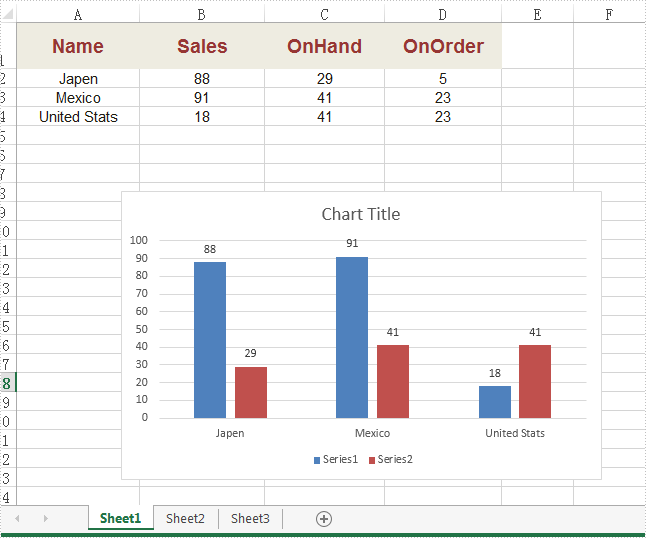
        // and corresponding integer data, creates a column chart with the text as the series and the integers as the values.
        private static void InsertChartInSpreadsheet(string docName, string worksheetName, string title,
        Dictionary data)
        {
            // Open the document for editing.
            using (SpreadsheetDocument document = SpreadsheetDocument.Open(docName, true))
            {
                IEnumerable sheets = document.WorkbookPart.Workbook.Descendants().
        Where(s => s.Name == worksheetName);
                if (sheets.Count() == 0)
                {
                    // The specified worksheet does not exist.
                    return;
                }
                WorksheetPart worksheetPart = (WorksheetPart)document.WorkbookPart.GetPartById(sheets.First().Id);

                // Add a new drawing to the worksheet.
                DrawingsPart drawingsPart = worksheetPart.AddNewPart();
                worksheetPart.Worksheet.Append(new DocumentFormat.OpenXml.Spreadsheet.Drawing()
                { Id = worksheetPart.GetIdOfPart(drawingsPart) });
                worksheetPart.Worksheet.Save();

                // Add a new chart and set the chart language to English-US.
                ChartPart chartPart = drawingsPart.AddNewPart();
                chartPart.ChartSpace = new ChartSpace();
                chartPart.ChartSpace.Append(new EditingLanguage() { Val = new StringValue("en-US") });
                DocumentFormat.OpenXml.Drawing.Charts.Chart chart = chartPart.ChartSpace.AppendChild(
                    new DocumentFormat.OpenXml.Drawing.Charts.Chart());

                // Create a new clustered column chart.
                PlotArea plotArea = chart.AppendChild(new PlotArea());
                Layout layout = plotArea.AppendChild(new Layout());
                BarChart barChart = plotArea.AppendChild(new BarChart(new BarDirection()
                { Val = new EnumValue(BarDirectionValues.Column) },
                    new BarGrouping() { Val = new EnumValue(BarGroupingValues.Clustered) }));

                uint i = 0;

                // Iterate through each key in the Dictionary collection and add the key to the chart Series
                // and add the corresponding value to the chart Values.
                foreach (string key in data.Keys)
                {
                    BarChartSeries barChartSeries = barChart.AppendChild(new BarChartSeries(new Index()
                    {
                        Val =
         new UInt32Value(i)
                    },
                        new Order() { Val = new UInt32Value(i) },
                        new SeriesText(new NumericValue() { Text = key })));

                    StringLiteral strLit = barChartSeries.AppendChild(new CategoryAxisData()).AppendChild(new StringLiteral());
                    strLit.Append(new PointCount() { Val = new UInt32Value(1U) });
                    strLit.AppendChild(new StringPoint() { Index = new UInt32Value(0U) }).Append(new NumericValue(title));

                    NumberLiteral numLit = barChartSeries.AppendChild(
                        new DocumentFormat.OpenXml.Drawing.Charts.Values()).AppendChild(new NumberLiteral());
                    numLit.Append(new FormatCode("General"));
                    numLit.Append(new PointCount() { Val = new UInt32Value(1U) });
                    numLit.AppendChild(new NumericPoint() { Index = new UInt32Value(0u) }).Append
        (new NumericValue(data[key].ToString()));

                    i++;
                }

                barChart.Append(new AxisId() { Val = new UInt32Value(48650112u) });
                barChart.Append(new AxisId() { Val = new UInt32Value(48672768u) });

                // Add the Category Axis.
                CategoryAxis catAx = plotArea.AppendChild(new CategoryAxis(new AxisId()
                { Val = new UInt32Value(48650112u) }, new Scaling(new Orientation()
                {
                    Val = new EnumValue(DocumentFormat.OpenXml.Drawing.Charts.OrientationValues.MinMax)
                }),
                    new AxisPosition() { Val = new EnumValue(AxisPositionValues.Bottom) },
                    new TickLabelPosition() { Val = new EnumValue(TickLabelPositionValues.NextTo) },
                    new CrossingAxis() { Val = new UInt32Value(48672768U) },
                    new Crosses() { Val = new EnumValue(CrossesValues.AutoZero) },
                    new AutoLabeled() { Val = new BooleanValue(true) },
                    new LabelAlignment() { Val = new EnumValue(LabelAlignmentValues.Center) },
                    new LabelOffset() { Val = new UInt16Value((ushort)100) }));

                // Add the Value Axis.
                ValueAxis valAx = plotArea.AppendChild(new ValueAxis(new AxisId() { Val = new UInt32Value(48672768u) },
                    new Scaling(new Orientation()
                    {
                        Val = new EnumValue(
                        DocumentFormat.OpenXml.Drawing.Charts.OrientationValues.MinMax)
                    }),
                    new AxisPosition() { Val = new EnumValue(AxisPositionValues.Left) },
                    new MajorGridlines(),
                    new DocumentFormat.OpenXml.Drawing.Charts.NumberingFormat()
                    {
                        FormatCode = new StringValue("General"),
                        SourceLinked = new BooleanValue(true)
                    }, new TickLabelPosition()
                    {
                        Val = new EnumValue
        (TickLabelPositionValues.NextTo)
                    }, new CrossingAxis() { Val = new UInt32Value(48650112U) },
                    new Crosses() { Val = new EnumValue(CrossesValues.AutoZero) },
                    new CrossBetween() { Val = new EnumValue(CrossBetweenValues.Between) }));

                // Add the chart Legend.
                Legend legend = chart.AppendChild(new Legend(new LegendPosition() { Val = new EnumValue(LegendPositionValues.Right) },
                    new Layout()));

                chart.Append(new PlotVisibleOnly() { Val = new BooleanValue(true) });

                // Save the chart part.
                chartPart.ChartSpace.Save();

                // Position the chart on the worksheet using a TwoCellAnchor object.
                drawingsPart.WorksheetDrawing = new WorksheetDrawing();
                TwoCellAnchor twoCellAnchor = drawingsPart.WorksheetDrawing.AppendChild(new TwoCellAnchor());
                twoCellAnchor.Append(new DocumentFormat.OpenXml.Drawing.Spreadsheet.FromMarker(new ColumnId("9"),
                    new ColumnOffset("581025"),
                    new RowId("17"),
                    new RowOffset("114300")));
                twoCellAnchor.Append(new DocumentFormat.OpenXml.Drawing.Spreadsheet.ToMarker(new ColumnId("17"),
                    new ColumnOffset("276225"),
                    new RowId("32"),
                    new RowOffset("0")));

                // Append a GraphicFrame to the TwoCellAnchor object.
                DocumentFormat.OpenXml.Drawing.Spreadsheet.GraphicFrame graphicFrame =
                    twoCellAnchor.AppendChild(new DocumentFormat.OpenXml.Drawing.
        Spreadsheet.GraphicFrame());
                graphicFrame.Macro = "";

                graphicFrame.Append(new DocumentFormat.OpenXml.Drawing.Spreadsheet.NonVisualGraphicFrameProperties(
                    new DocumentFormat.OpenXml.Drawing.Spreadsheet.NonVisualDrawingProperties() { Id = new UInt32Value(2u), Name = "Chart 1" },
                    new DocumentFormat.OpenXml.Drawing.Spreadsheet.NonVisualGraphicFrameDrawingProperties()));

                graphicFrame.Append(new Transform(new Offset() { X = 0L, Y = 0L },
                                                                        new Extents() { Cx = 0L, Cy = 0L }));

                graphicFrame.Append(new Graphic(new GraphicData(new ChartReference() { Id = drawingsPart.GetIdOfPart(chartPart) })
                { Uri = "http://schemas.openxmlformats.org/drawingml/2006/chart" }));

                twoCellAnchor.Append(new ClientData());

                // Save the WorksheetDrawing object.
                drawingsPart.WorksheetDrawing.Save();
            }

        }
    }

page 225